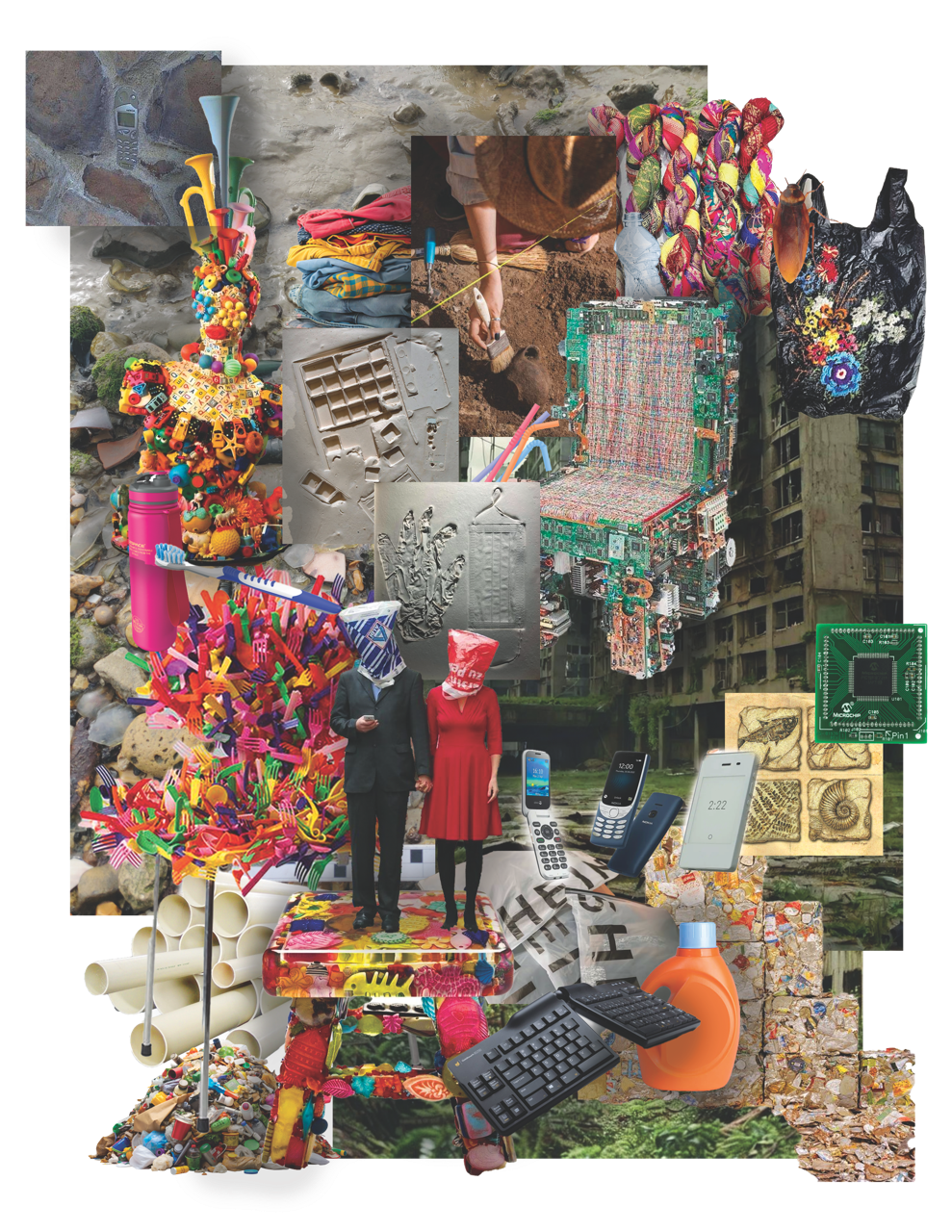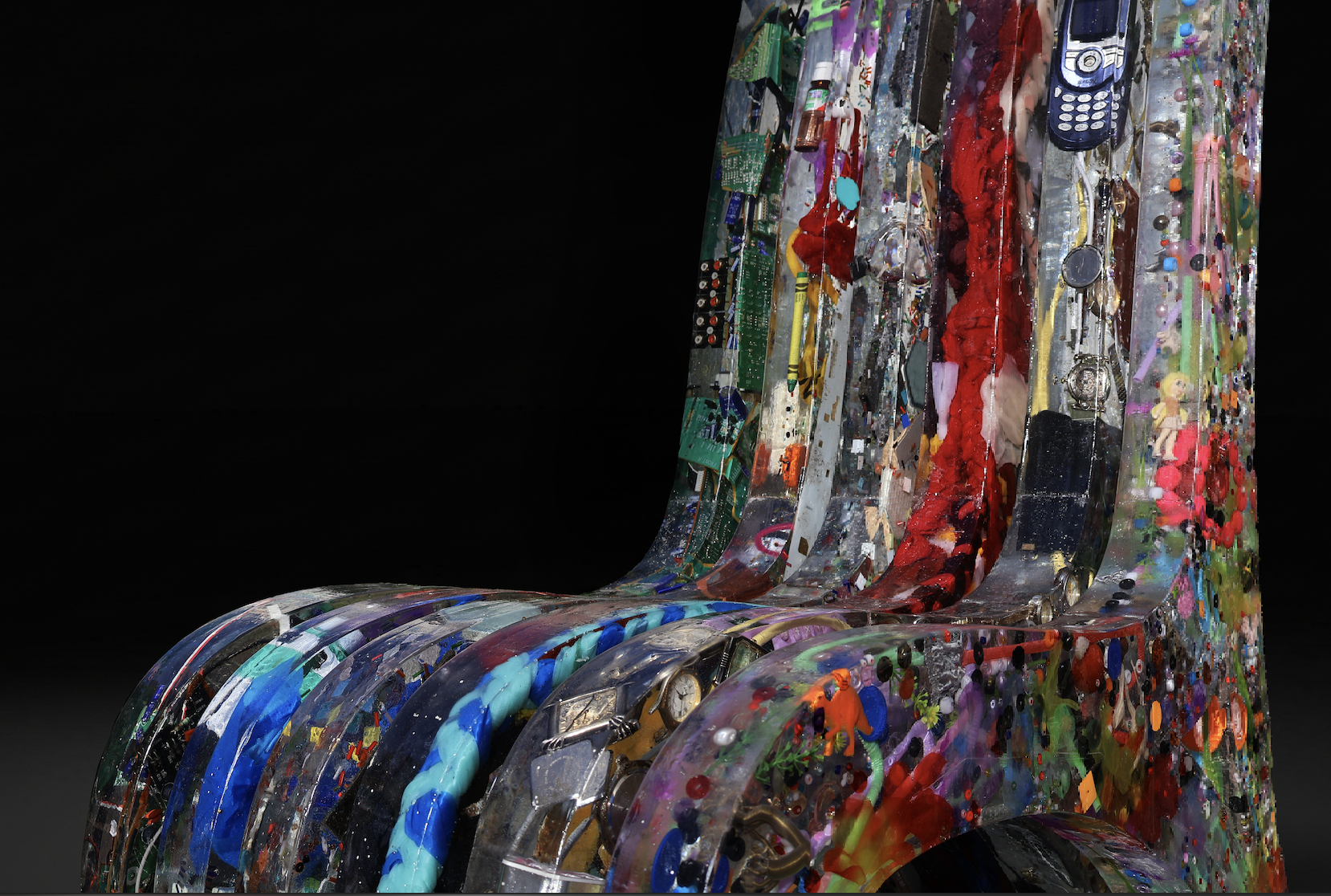

Imagine it is the year 3025. A group of archeologist just found the remains of a chair of our time. But unlike fossilized bones of animals, or stone tools, this tells a different story. Its layers reveal plastic, electronic waste, fabrics, and other scrap materals that show the everyday leftovers of a civilzation addicted to consumption.
If furniture has always been a reflection of the time period that created it, what does this artifact say from our era?
What does it mean when our comfort rests on layers of waste?
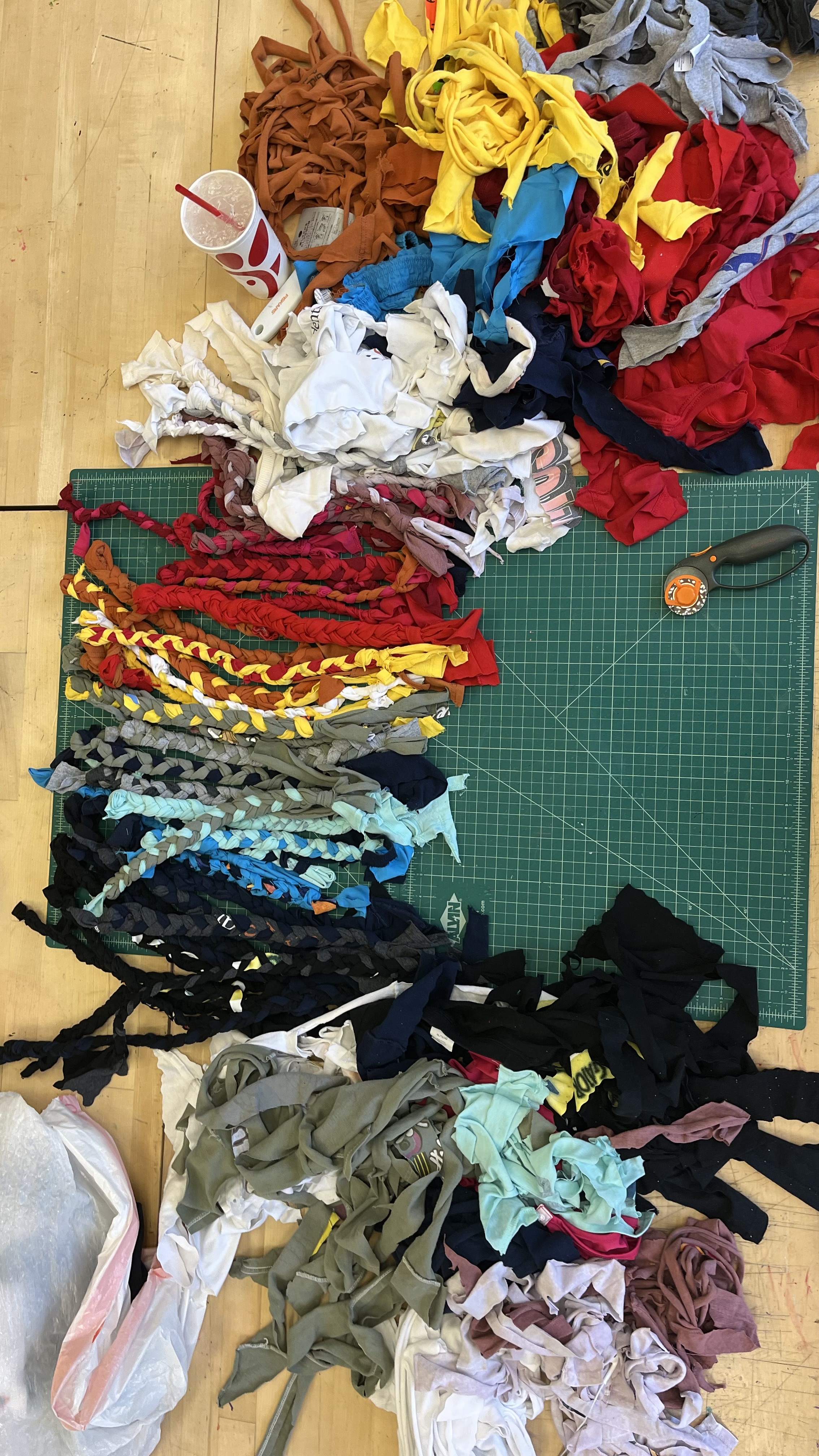
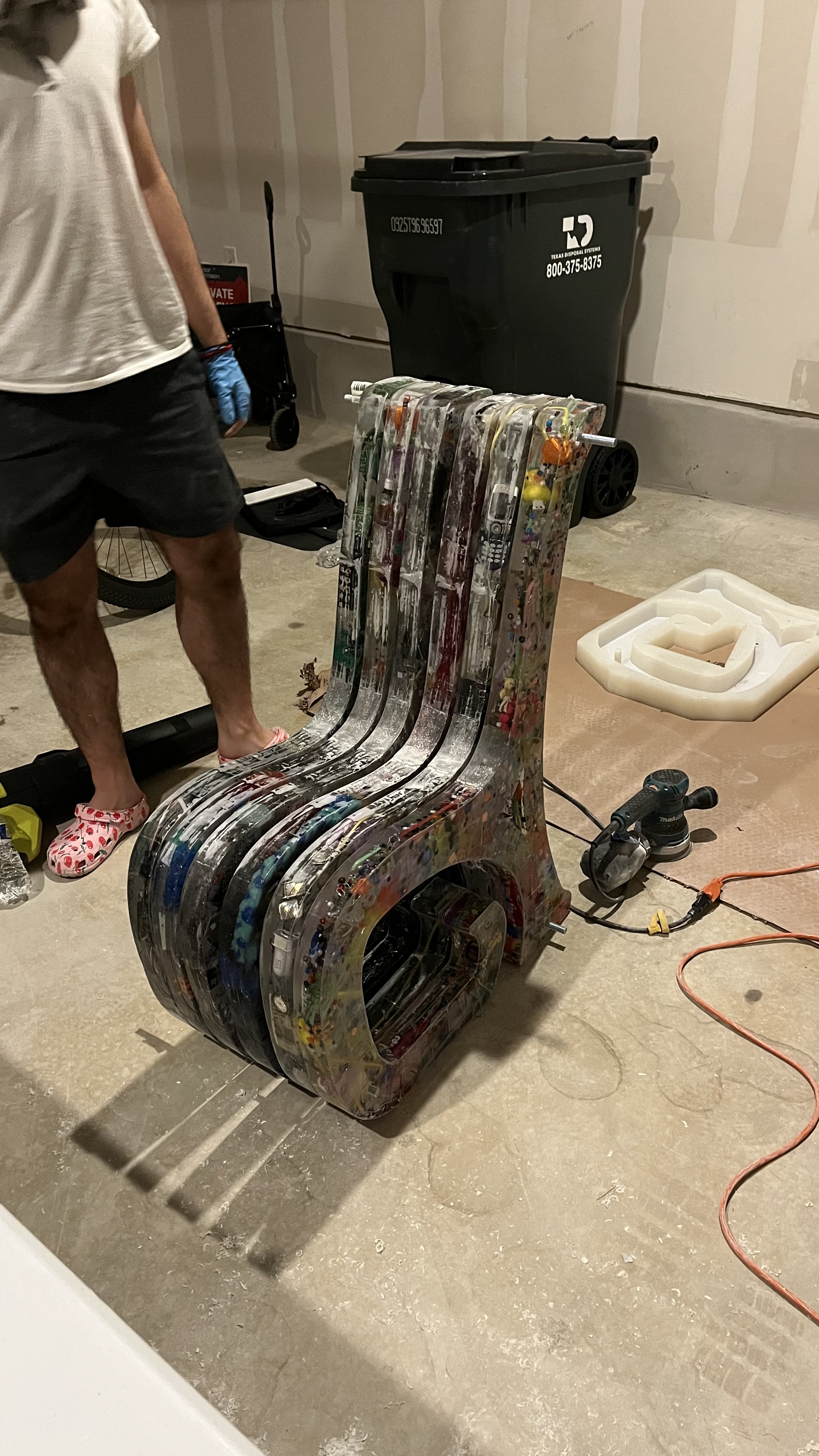
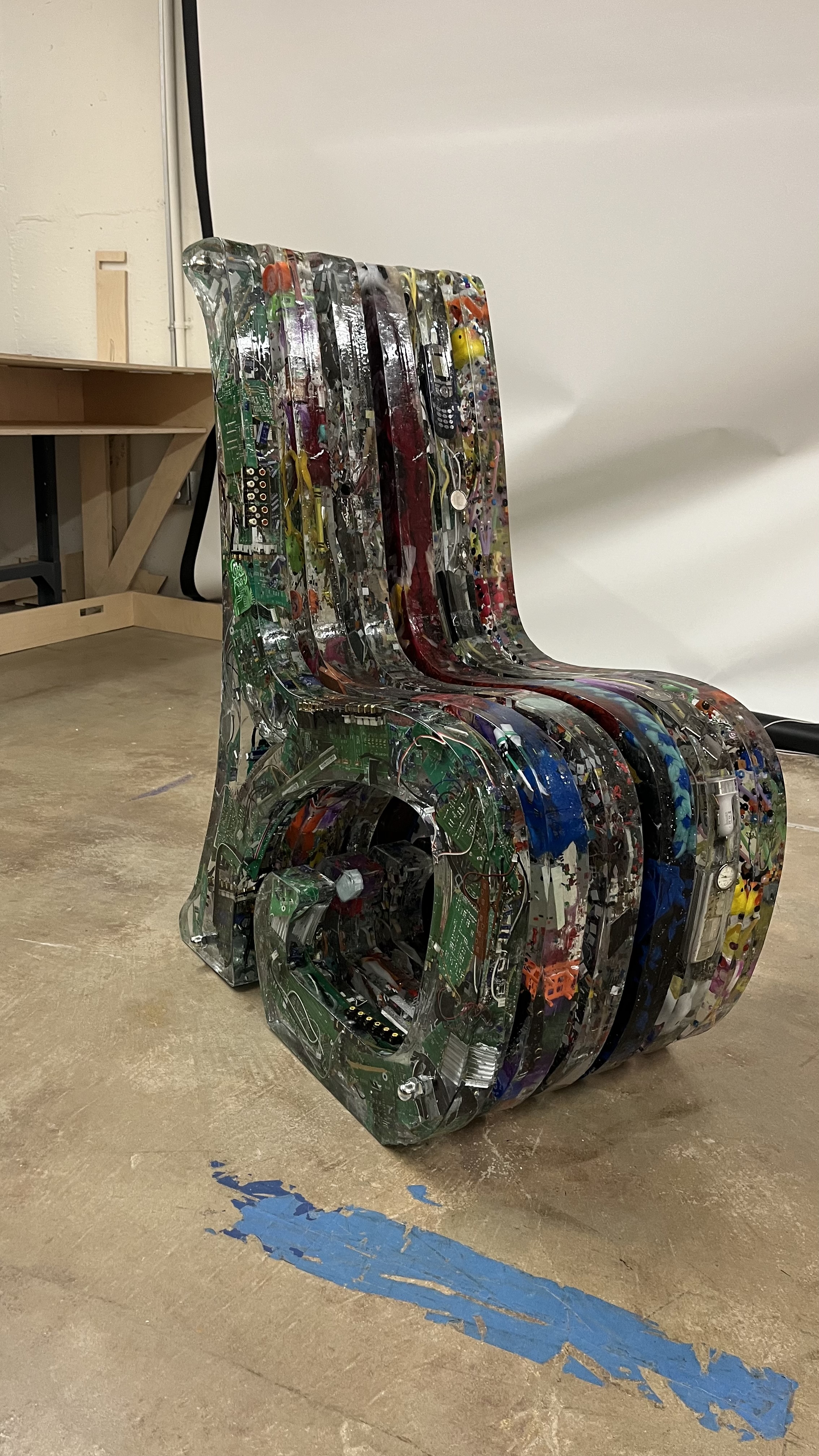
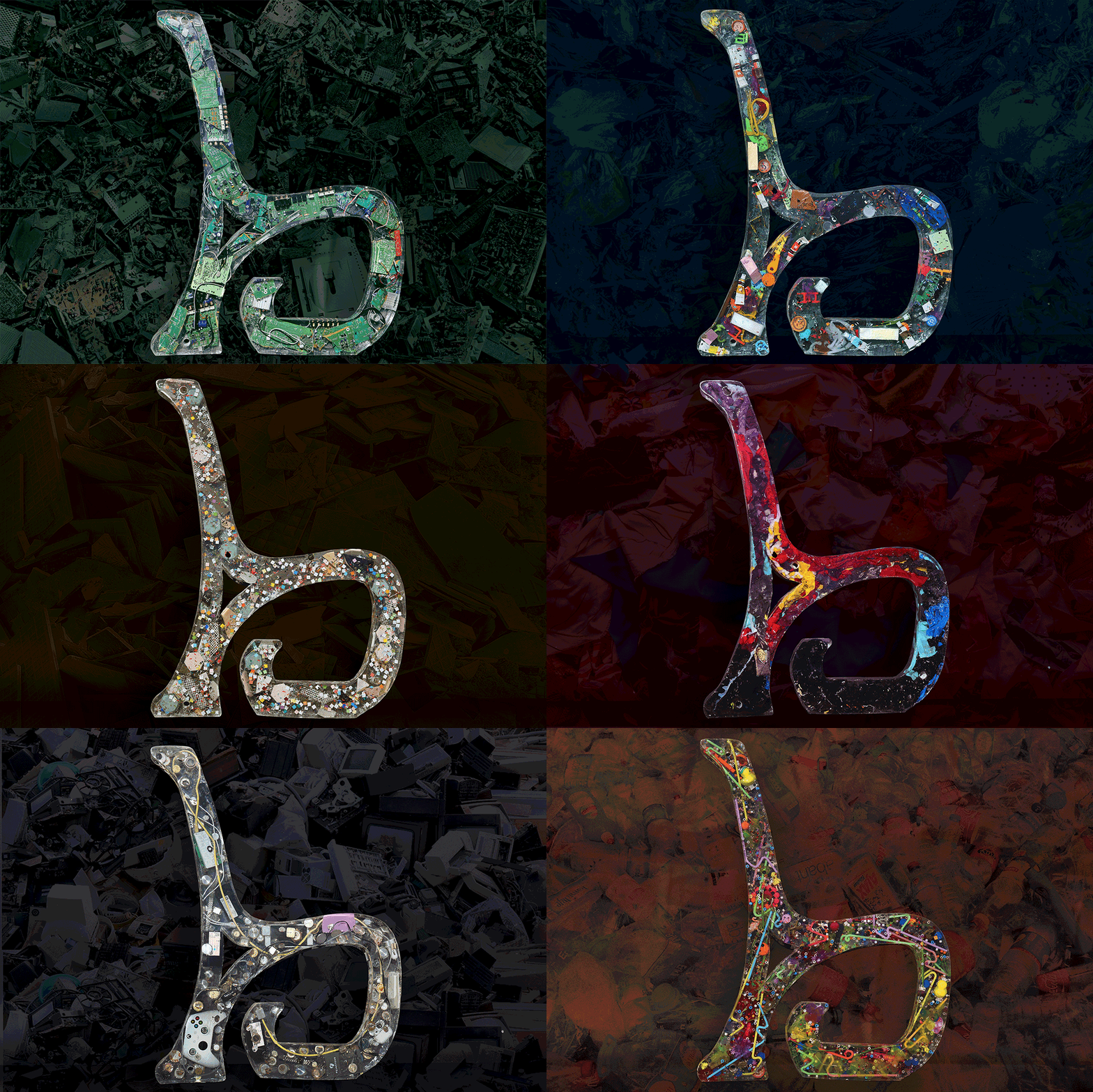
Trace is a functional piece of furniture designed as a modern fossil. It is composed of layered material that mimics geological strata accumulated over time. Each layer is made from waste, representing physical evidence of our current generation of consumption.
At the same time, In Translation reflects the transitional moment of the senior capstone itself. Students are translating years of learning into independent work, and academic exploration into professional practice.


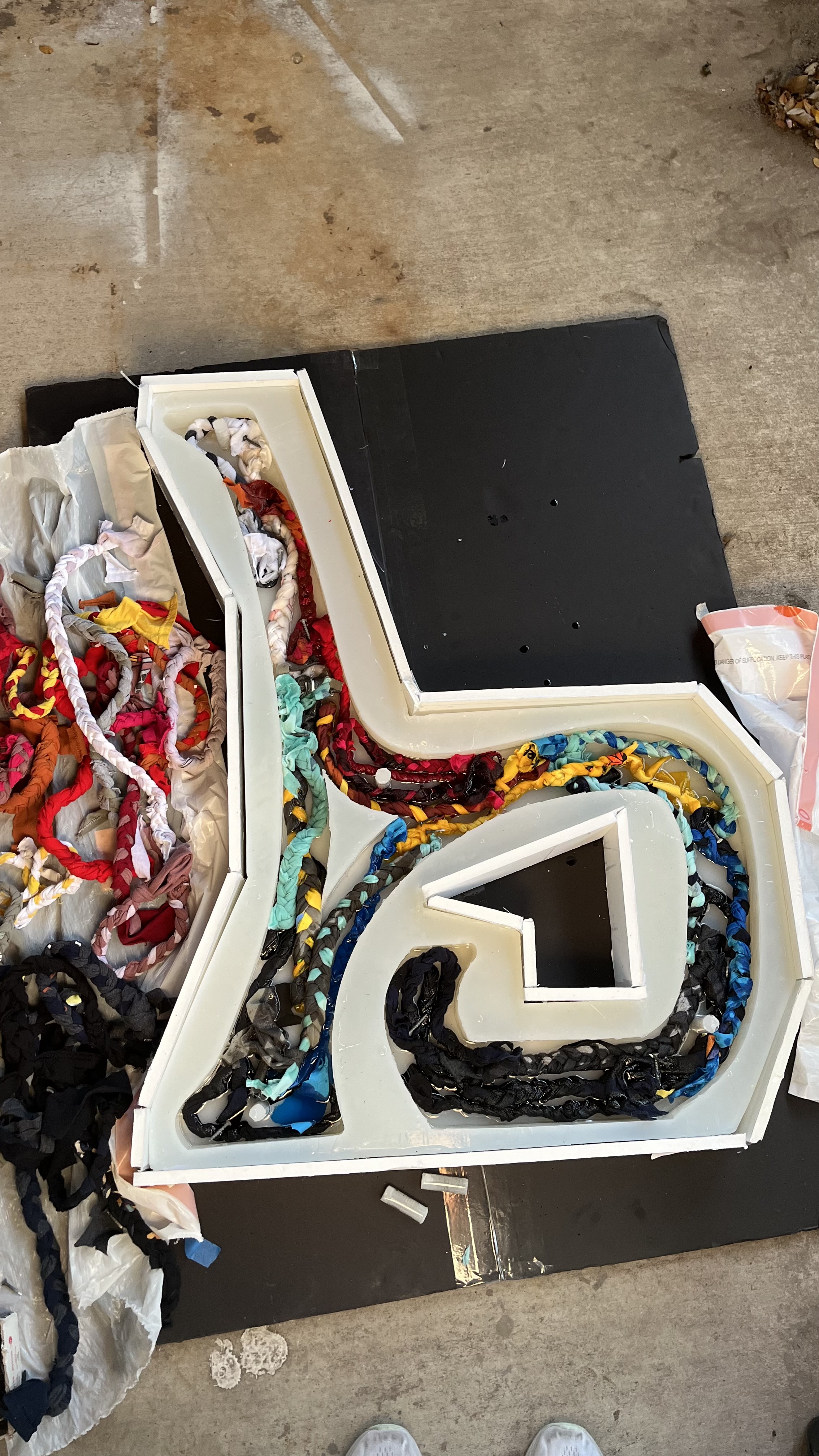
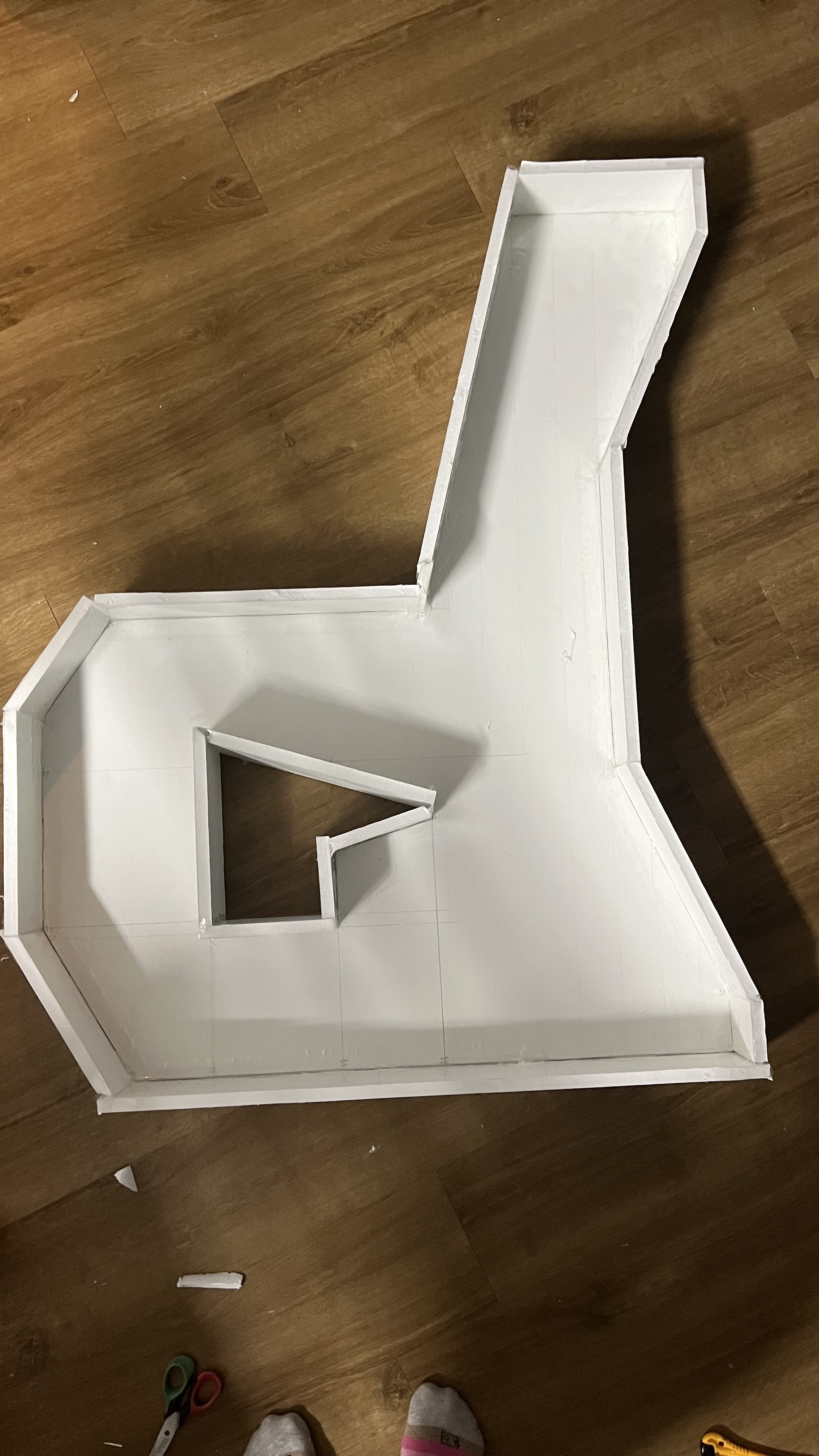
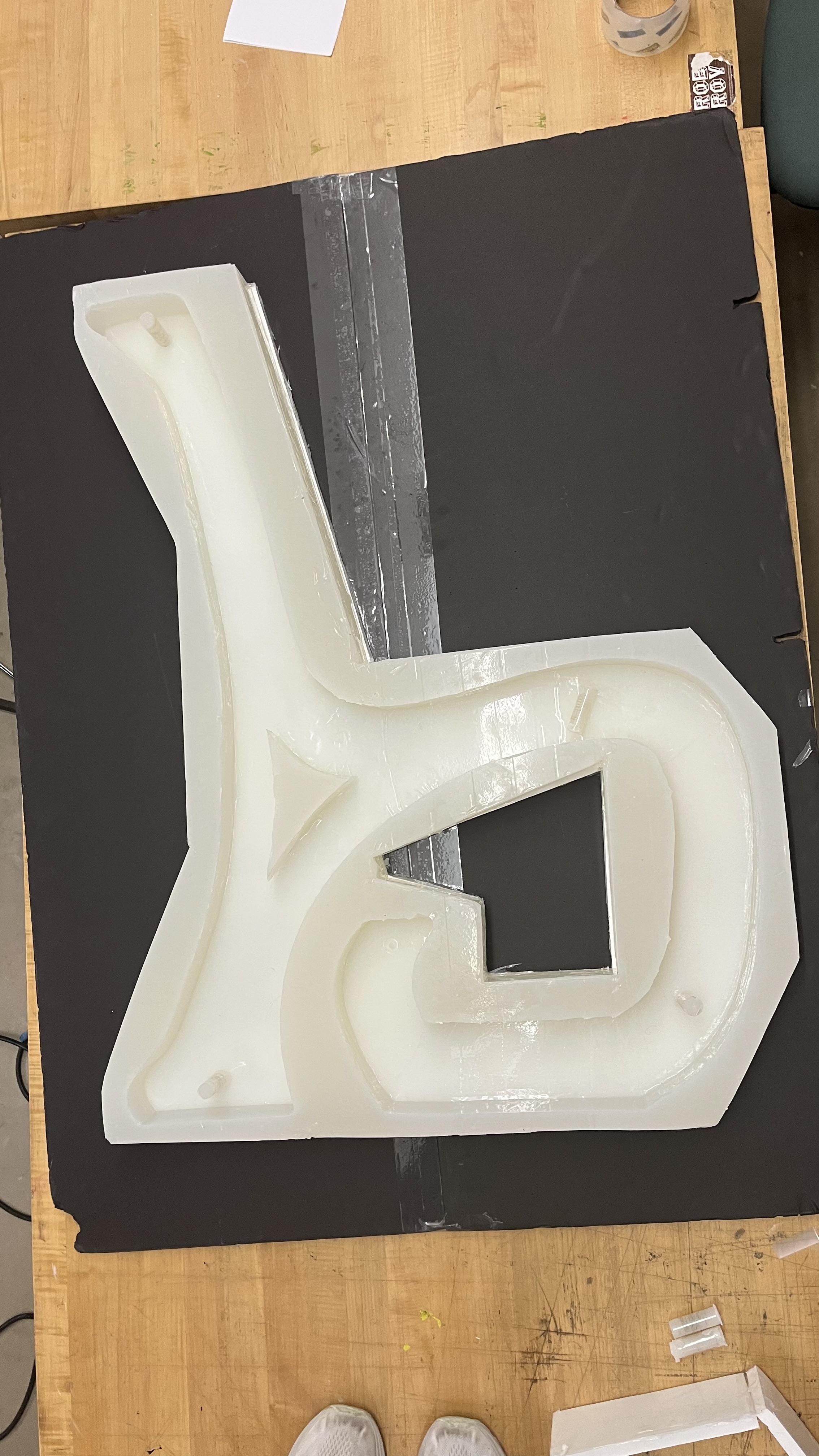
The chair is constructed through stacked resin layers, each representing a different waste stream. This emphasizes the permanence of material decisions in product making, allowing the piece to work as both furniture and artifact, a visible record of our time, consumption, and human impact.
The project reframes furniture as cultural evidence. It explores the tension between design creation and material permanence, inviting reflection and challenging designers and users to confront the long-term impact of what we create and discard. Materials that may come to define us as a civilization.


Imagine it is the year 3025. A group of archeologist just found the remains of a chair of our time. But unlike fossilized bones of animals, or stone tools, this tells a different story. Its layers reveal plastic, electronic waste, fabrics, and other scrap materials that show the everyday leftovers of a civilization addicted to consumption.
If furniture has always been a reflection of the time period that created it, what does this artifact say from our era?
What does it mean when our comfort rests on layers of waste?
Plastic waste crisis – Half of the plastics ever manufactured have been made in the last 15 years, and most will stay in the planet for the next 500 years. Microplastics have been detected in nearly every part of the human body.E- waste – Rising five times faster than the documented e-waste recycling according to the United Nations Global E-waste Monitor. We generated over 62 million tons in 2022 making it the fastest growing waste stream.Fast fashion and microtrends – over 92 million tons of textile waste annually.
ARCHEOLOGICAL APPROACH
Humans are leaving an irreversible foot print in the planet. Technofossils, human made artifacts that can become part of Earth’s future technology.Chairs are tied to their time periods. We could study design movements just by looking at furniture. How does our era translate to a chair?


Inspired by geological processes, sedimentary fossil and Earth’s uncomformity types.
Slice Chair by Matthias Bengtsson. Resembles geological strata or a topographical map
Layered fabric chair by Richard Hutten. This chair uses 840 meters squared of fabric inspired by the Painted Desert in Arizona.
The shape was inspired by my study abroad during Milan. I picked some chairs that felt modern, played with the idea of permanency in material, as well as relevant to the way we live in society today


SPAZIO ROSSANA ORLANDI
Ron Arad, Blue Chaise Longue
KARTELL MUSEUM
Maarten van Severen, LPC Lounge Chair
SPAZIO ROSSANA ORLANDI
Ron Arad and Braid, Flip outdoor chair
SPAZIO ROSSANA ORLANDI
Ron Arad, Modou Yellow


This visit sparked my interest for history and documentation. It was not until later in the semester where I truly started research and organizing information by decades. Here are some key findings:
This phase involved both the ideation of the content of the book, as well as the paper and craftmaking process. I began by making small books to undertand which type of paper I would be using, as well as the binding methods. This small prototype also allowed me to start planing layouts and make skeletons for each of the spreads.


After printing all the content, the next stept was to fold each paper and glue it with PVA glue. I left my book to dry an entire night while it was under pressure to make sure it layed flat and ready to work on the cover.


Picture 1
Picture 2
My decision for the cover, was to have something that coveyed the colors, messy strokes, and played with legibility but was still organized. First, I began by spray painting some paper to use on the inside of the cover, later I printed on top of this personalized paper. The main color of my book would be orange since it encapsulates that playfun and fun feelings as well as youthful.


After this, my plan was to print on the sprayed paint paper lots of different styles of graffiti for each letter of the cover, while this one would be a plain sheet of black cover weight with cutouts to reveal this explosion of color.


Picture 1
Picture 2
This inside cover is a representation of the book itself. It portays multiple styles of typography that were popular in different decades one over the other, representing how graffiti is usually temporary and there is always new artists covering the old art.


Picture 1
Picture 2
The font used for the cover was very stategically chosen. Jeanne Moderno OT Geometrique was chosen for multiple reasons; first it reseambles those graffiti stencils that could be used to repeat the same tag over and over and while combined with the cutout, it only helps push this concept, second, it is a play on legibility just like how graffiti pushes this design principle to its limits.


Picture 1
Picture 2


Overall there was a positive feedback regarding the style and content of this book. One of the areas for improvement would be spending more time type setting each paragraph. There was a couple cases where the layout and the size made of the book itself interrupted the flow of the reader. After changing a couple spreads, I also made sure that during my second edition I payed closer attention to small crafting issues. Some of the cutouts did not fully aligned, but the second time I took my time and handcut each design.I would love to expand on this book and maybe in a future rewrite the content with my own words, since it is mostly summarized by AI. This course allowed us to utilize as a tool, as well as doing it consciouly and aware of the effects. With the book, I summited a page essay explaining in detail the use of AI, the feelings it evokes, and the learning I achieve.